AI Agents Are Entering the Organisation. Is Your Architecture Ready?
While many are still discussing individual AI agents, the next question is already emerging: How do we orchestrate entire agent systems within an enterprise environment?
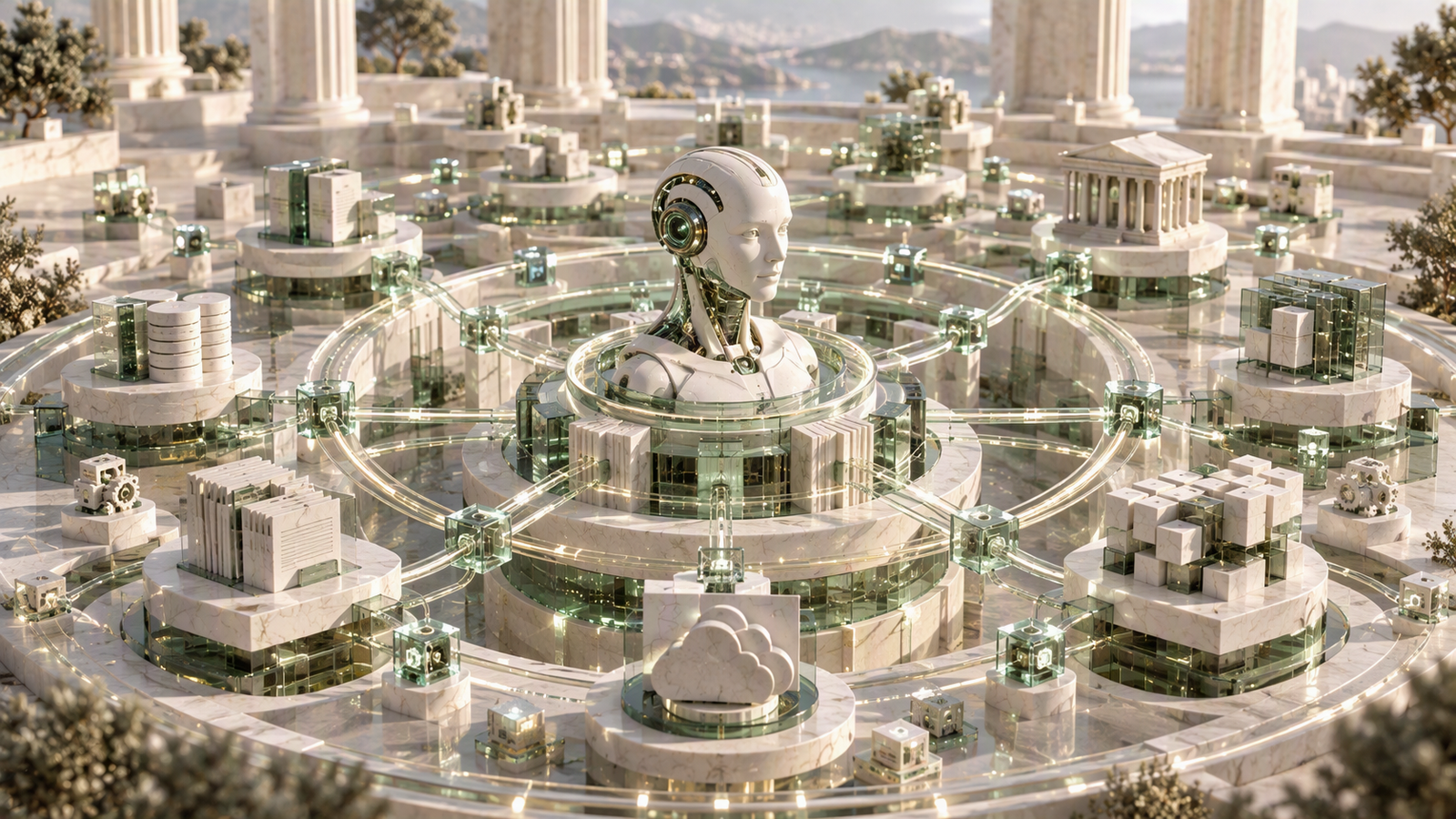
We explored this question as part of the CAS in Enterprise Architecture. One insight stood out to me: the value lies not only in individual agents, but also in how they interact with existing processes, applications, data, and governance structures.
When multiple agents work together, new architectural challenges arise:
- How are tasks distributed and results brought together?
- How do we keep decisions and execution under control?
- How do we ensure security, compliance, and traceability?
- What role does the human play in the interaction with agents?
A few weeks ago, I came across the video Graph Engineering 101. It presents a possible architectural approach to agentic systems, distinguishing between three elements: a harness, comprising the model, tools, memory, and guardrails; an agent loop that drives iterative execution and feedback; and a graph that serves as the orchestration structure.
What I find particularly interesting is the idea of translating complex tasks into clearly defined workflows. Patterns such as fan-out, join, and router make it possible to distribute tasks, involve specialised agents, and bring their results together.
The graph represents the relationships and dependencies between individual components. This shifts the architectural focus beyond the capabilities of individual agents towards how they interact and fit into larger processes.
For me, this is fundamentally an architectural question: How do we design AI systems that are not only capable, but also controllable, traceable, and integrated into existing enterprise structures?
Ultimately, it is not just about what an agent can do, but how it fits into the wider system.
Graph Engineering 101: https://youtu.be/IrW0_f-w4kA?si=62qS2vd6t_nx_Y0U